In 2024, my first year of portable radio operating, my kit stayed pretty constant. The Yaesu FT-891 in a hard case, the Eco-Worthy 20Ah battery wrapped in bubble-wrap, SOTABeams antenna and pole, and a picnic blanket, all shoved into my work bag. The JPC-12 antenna I purchased in September allowed me to switch things up a bit and experiment with the higher bands, but it wasn’t until this year that the amount of portable radio kit sat in a pile in the study really exploded.
In February, a good bag and seat allowed the radio kit to be accessible while still being protected, enabling the quick setups and pack-downs required for my new favourite activities, RaDAR Rally and a bunch of ridiculous POTA roves. In March, the addition of an X6100 allowed me to pack a radio kit into my travel luggage, go on tougher hikes and casual days on the beach. And in June, my Arrow antenna allowed for hilltop QSOs and balloon tracking followed by the highlight of the year, letting the Scouts tune in and hear an astronaut on the ISS during JOTA 2025.
If I’ve learned anything from all of that, it’s that I should probably stop buying so much kit (even if most of it was second-hand). But before the radio shack austerity measures of 2026 kick in, I had the opportunity to snag a QMX transceiver thanks to Neil G7UFO, along with one of his tiny turret microphones.
This thing is tiny. I almost can’t believe how small it is.
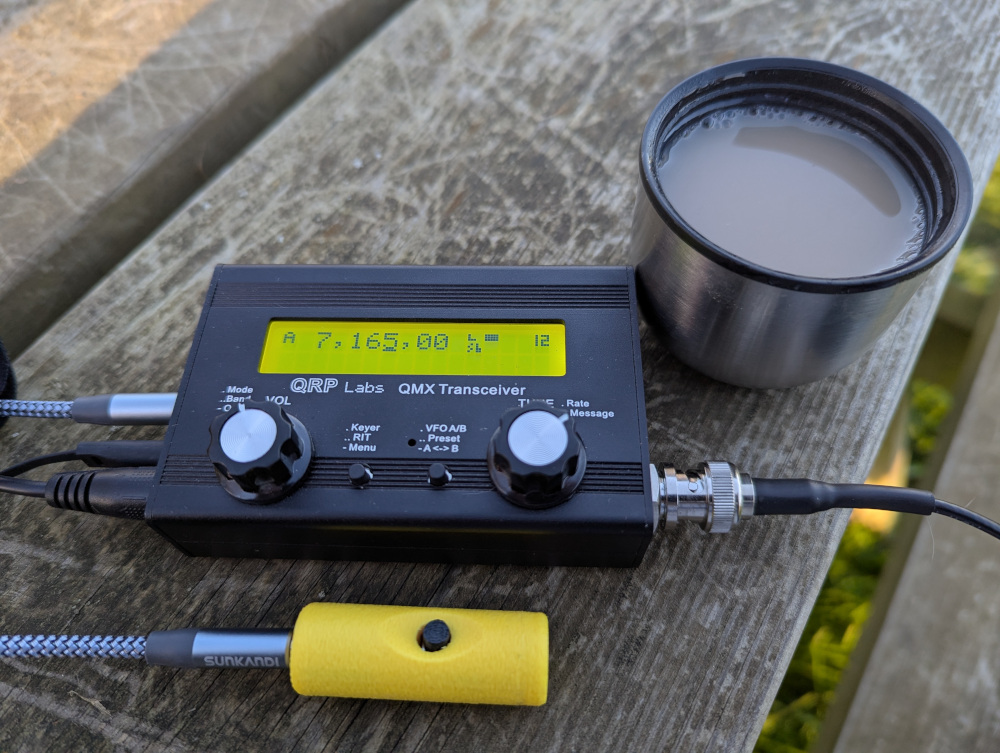
I thought the X6100 was small when I first started taking it out, in its own little hard case, with battery, mic, antenna and cables all packed into an over-the-shoulder camera bag. But the with QMX, combined with my home-made 40m dipole antenna, a 10000mAh power bank and all the cables, the whole kit now fits in pretty much into the same space envelope that the X6100 takes up by itself.
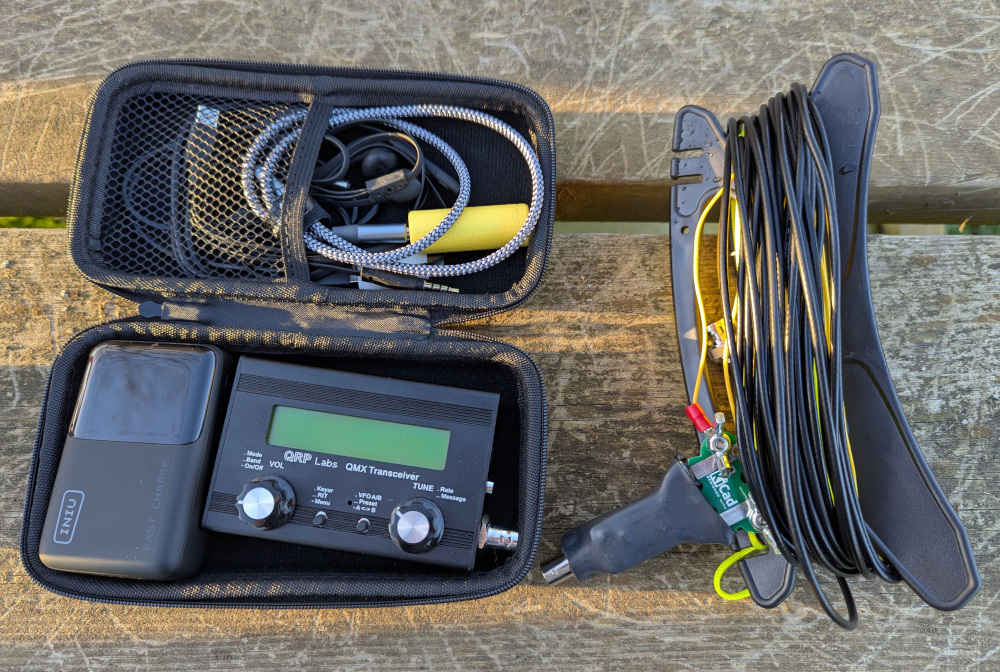
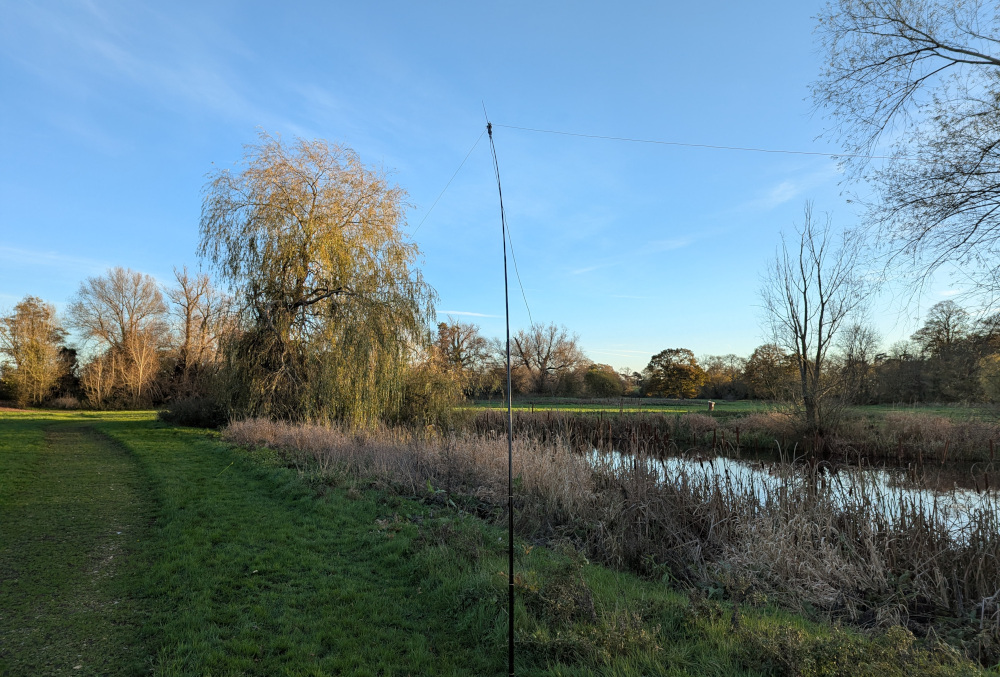
Yesterday I took the kit out to GB-5677 Canford SANG. Honestly it’s just a dog-walking area, and much less adventurous than my preferred POTA spots, but it’s close to home, has picnic tables, and plenty of open space, making it ideal for testing new equipment. I set up down by one of the lakes, and got calling CQ.
It was a slow start. Really slow. I was calling for ten minutes, slowly deciding in my head that something was wrong with the radio, before I had my first caller—John M6EAM, only a few miles down the road. He gave me a 57 report, so the good news was that I was at least transmitting something. But was I really “getting out”? Luckily, two minutes later Chris G4ZTX from Rotherham answered my call and also gave me a 57. So the kit did work after all!
Chris let me know that the longer I keyed the mic, the more I was dropping down into the noise, which made me wonder if I had power supply issues. But the power bank I was using claimed 45W output, compared to the QMX’s claimed maximum draw of 8.4W, so I’m not sure quite what was going on. I asked my next few callers for a check to see whether it was repeatable, but no-one else reported the same thing, so I think the jury’s still out on that one and I’ll continue to ask for audio reports during my next few activations.
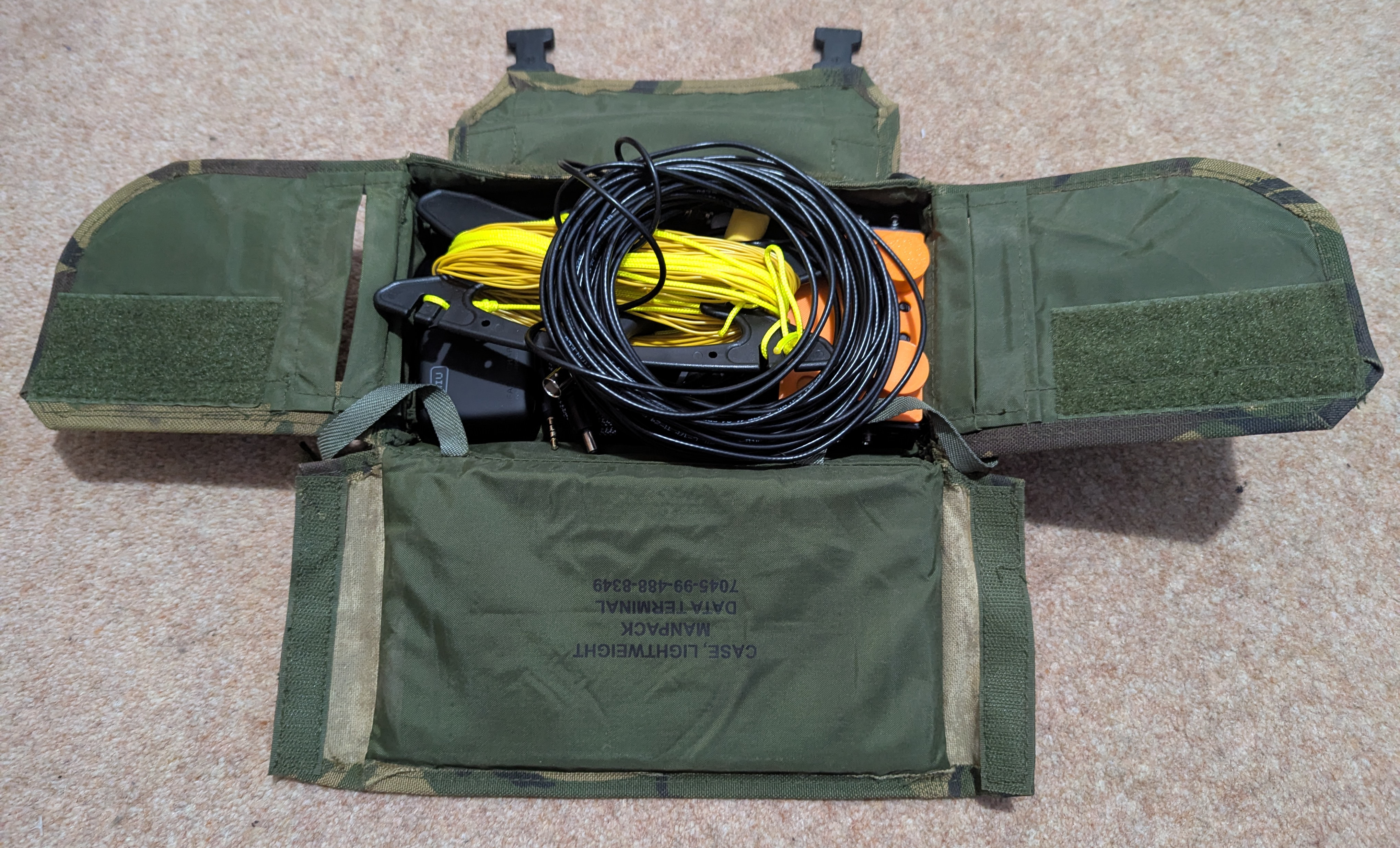
The other bonus discovery is that I finally have a radio that fits inside the Bowman manpack Data Terminal case that I’ve had lying around for ages, wondering what to do with it. (The X6100 is too tall, and the FT-817 too wide.) And not only does the radio fit, so does everything else, with the exception of the pole.
I’ve never been entirely clear on what the “rules” of the “1lb POTA challenge” are, firstly because it largely seems to be on YouTube and I don’t really like watching YouTube videos, and secondly because it seems like the operators proceed to cram their 1lb POTA kit inside a bag weighing at least 2lb. However, I feel like with this kit I am at last tangentially, probably logarithmically, approaching it. For anyone interested, I’ve itemised the kit below, including the mass of each component.
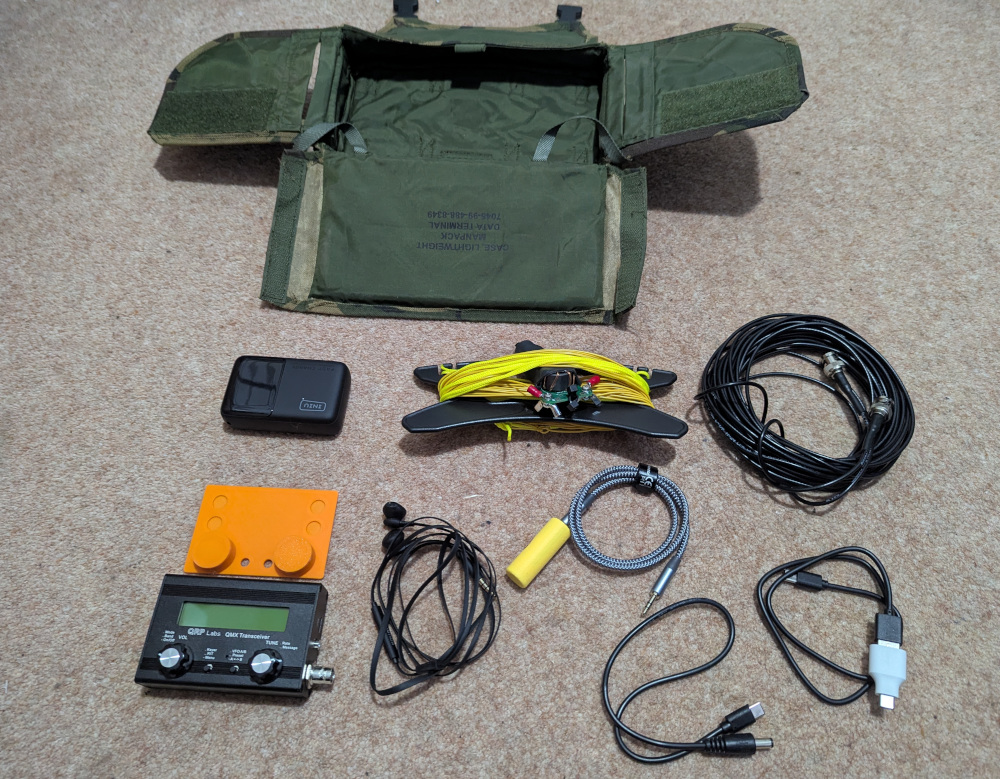
- QRP Labs QMX Transceiver, 60-15m variant (218g)
- QMX Cover Protector (14g) (thanks Joe M7JSE for printing this!)
- INIU P50-E1 Power Bank (161g)
- G7UFO Turret Mic for QMX with 0.5m cable (24g)
- USB PD 12v Trigger Cable (11g)
- Old pair of in-ear headphones (13g)
- USB OTG adapter & USB A-to-C cable (for emergency FT8CN in case of failure to activate) (22g)
- Homemade 40m dipole antenna with DG1JAN balun and winder (145g)
- 10m RG-174 coax (147g)
- Spirit of Air Pocket Pole (278g)
- Spirit of Air Pocket Pole ground stake kit (160g)
- 2 tent pegs (29g)
This adds up to 1222g, or 2lb 11oz, so still a way to go yet. Still, it’s by far my lightest and most portable kit to date. Most importantly, as I plan longer and tougher hikes for 2026, it’s small and light enough that I can sling it in my rucksack alongside all my other gear, and will barely know it’s there. Compare that to the FT-891 and 20Ah battery in their dedicated rucksack, where their 9kg bulk makes itself known!
The cases are:
Here’s the 10 contacts I made to activate the park, all on the 40m band. Nothing too impressive of course, as the QMX tops out at 5W. But it’s sparked in me a bit of the joy of being a new operator again—I was so excited to hear Italy and Spain coming back to my calls, from such a tiny rig. I’ve got the QRP bug, for sure.
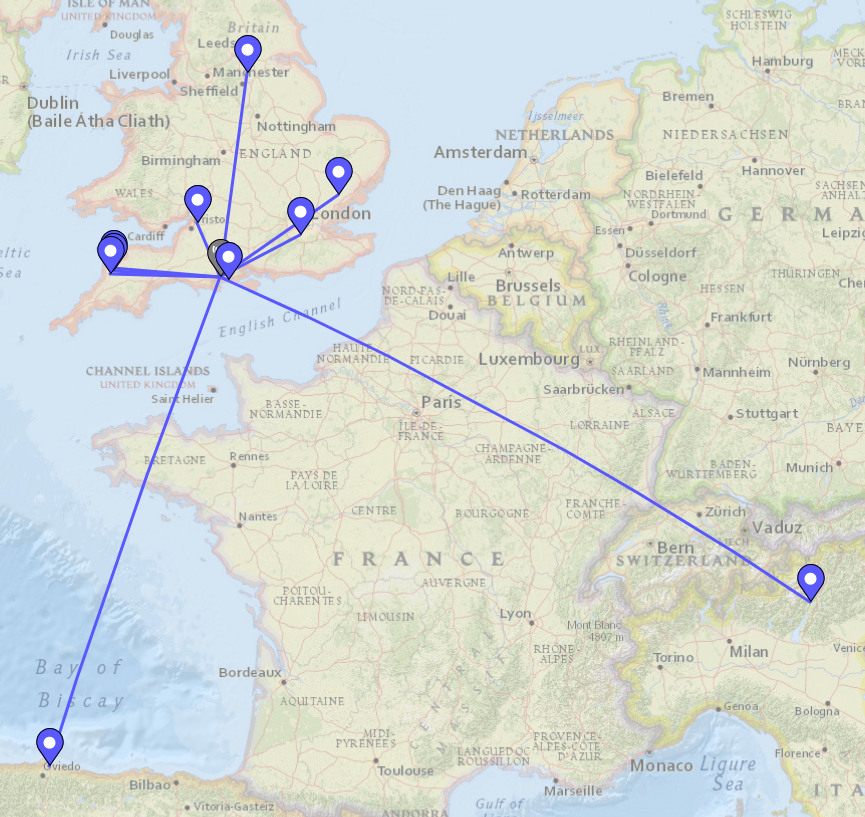
Thanks to my all my contacts today for bearing with me while I tried out the new kit. See you on the air next time!
Comments